
PU Roof Sandwich Panels for Insulated Roofing Systems
Polyurethane roof sandwich panels for industrial, warehouse, commercial, prefabricated, and modular roofs that require insulation, weather protection, and efficient installation.
YG Panels supplies PU roof sandwich panels with profile options, project-based length planning, accessory coordination, and factory support for bulk orders and recurring project supply. Polyurethane roof sandwich panel, PU insulated roof panel, and insulated roof sandwich panels are all relevant commercial search terms for this product category, but the selection still depends on the roof structure, profile family, installation details, and delivery scope.
✓ Insulated roof panel supply for project-based roofing systems
✓ Profile, thickness, length, and facing-material discussion supported
✓ Matching flashing, trim, and roof accessories available
Cross-Section Reference + Accessory Coordination
The uploaded section illustration shows a Great Wall insulated roof profile with effective width, overall width, thickness examples, and matching accessory items such as ridge cap, wall-side flashing, sealing strip, edge trim, and gutter.
What a PU Roof Sandwich Panel Solves in Real Roofing Projects

01
Thermal insulation for roof assemblies
A polyurethane core helps reduce heat transfer through the roof envelope, which is especially important for factories, warehouses, workshops, and prefabricated buildings exposed to strong summer heat or colder winter conditions.
02
Roof enclosure with fewer site-built layers
Insulated roof sandwich panels combine metal facings and insulation in one panel system. That simplifies roof build-up compared with multi-layer solutions that require more on-site assembly steps.
03
Profile compatibility with different roof structures
Roofing projects vary by slope, span, drainage plan, support structure, and architectural direction. Profile selection matters because it influences overlap, stiffness, water management, and the finished roof line.
04
Accessory supply that supports installation
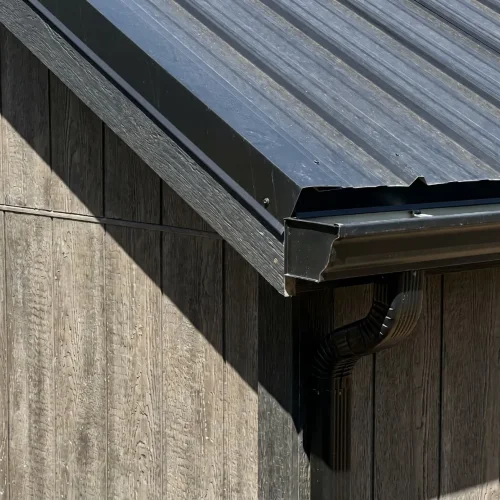
Ridge cap, wall-side flashing, starter strip, edge trim, sealing strip, gutter, and fastening accessories should be planned together with the panel so the roofing package arrives ready for fabrication and installation.
Section Reference, Width Example, and Material Direction
The uploaded Great Wall insulation large board illustration shows a common insulated roof reference with effective width 950 mm, overall width 1000 mm, and section examples at 45 mm and 65 mm. The same reference also indicates galvalume-coated steel or aluminum-alloy facing direction and custom-cut length as part of the discussion scope.
- Effective width matters when estimating roof coverage and quantity.
- Overall width and overlap logic matter when coordinating roof structure and installation direction.
- Thickness should be matched to insulation target, building use, and project budget.
- Facing material, color, and custom length should be confirmed before final quotation.
Reference shown in the uploaded roof section illustration
Effective Width: 950 mm
Overall Width: 1000 mm
Thickness Examples: 45 / 65/100mm/Custom
Length: Custom Cut
These values are useful section references for early-stage communication. Final production should still follow the confirmed profile, structure, project requirements, and manufacturing drawing.
Profile Families Used for Roofing Sheet and Insulated Roof Discussions

Typical profile families shown in the uploaded specification overview
The specification set includes roofing sheet directions such as 750 ribbed, 760 angle, 780 wave, 820 angle, 836 wave, 840 roof, 950 Great Wall, and 970 roof, together with adjacent insulated and wall-side options used in combined envelope projects.
- 750 ribbed and 780 wave profiles are often reviewed for standard roofing-sheet discussions.
- 760 and 820 angle profiles provide additional geometry options when roof structure or water control requirements differ.
- 950 Great Wall and 970 roof directions are useful references when insulated roof panels are part of the project scope.
- 900 wall profiles matter when the buyer wants coordinated wall and roof sourcing from one factory.
750 Ribbed
760 Angle
780 Wave
820 Angle
836 Wave
840 Roof
950 Great Wall
970 Roof
Roof Accessories That Help Complete the Installation Package
Ridge and roof-edge treatment
Ridge cap, edge trim, and starter strip help define the roof perimeter and finishing logic where water control and clean installation detail both matter.
Wall-side and transition detailing
Wall-side flashing is important where the roof meets parapets, wall upstands, or adjacent structures that require a controlled junction.
Fastening and cover parts
Screw clip and screw cap cover help with fastening treatment and cleaner finish where the project needs a more complete roof system package.
Sealing and drainage support
Sealing strip and gutter matter when the project needs better closure at profile gaps and clearer drainage planning at the roof edge.

Where Polyurethane Roof Sandwich Panels Are Commonly Used
Industrial workshops
Warehouses and logistics buildings
Commercial utility buildings
Prefabricated buildings
Modular and temporary buildings
Combined wall-and-roof sourcing
FAQ About PU Roof Sandwich Panels
What is a PU roof sandwich panel?
A PU roof sandwich panel is an insulated roofing panel with a polyurethane core and metal facings. It is used when the roof system needs thermal insulation, weather protection, and faster installation than multi-layer site-built roof assemblies.
Where is a polyurethane roof sandwich panel commonly used?
It is commonly used for industrial workshops, warehouses, logistics buildings, commercial utility buildings, prefabricated projects, and modular buildings that benefit from insulated roof construction.
Which roof profiles can be discussed?
Profile discussions can include ribbed, wave, angle-lock, roof-sheet, Great Wall, and related insulated directions. The best fit depends on structure, drainage requirement, coverage calculation, and installation method.
Can accessories be supplied together with the roof panel?
Yes. Ridge cap, wall-side flashing, starter strip, edge trim, sealing strip, gutter, screw clip, and screw cap cover can be discussed together with the panel order for a more complete roof package.
Can panel length and color be customized?
Yes. Project-based production can discuss custom length, facing material, color, quantity, and accessory configuration according to the confirmed roof system.
What information helps produce an accurate quote?
Send the project type, intended roof profile, panel thickness direction if known, panel length or drawing, quantity, destination country, and whether matching accessories are required.
Talk to YG Panels About Your Roofing Project
✓ Profile recommendation based on roof application and reference drawings
✓ Support for panel, flashing, trim, and accessory coordination
✓ Project-based customization for length, quantity, and system direction
Help us recommend the right roof panel faster
Useful inquiries usually include the roof application, profile reference, required length, insulation target, quantity, destination, and the accessories that need to ship with the panel.
- Project type and roofing application
- Preferred roof profile or reference drawing
- Required panel length, quantity, and destination
- Thickness target or insulation requirement
- Accessory needs such as ridge cap, flashing, sealing strip, edge trim, or gutter