Rock Wool Sandwich Panels for Fire-Oriented Wall and Roof Systems
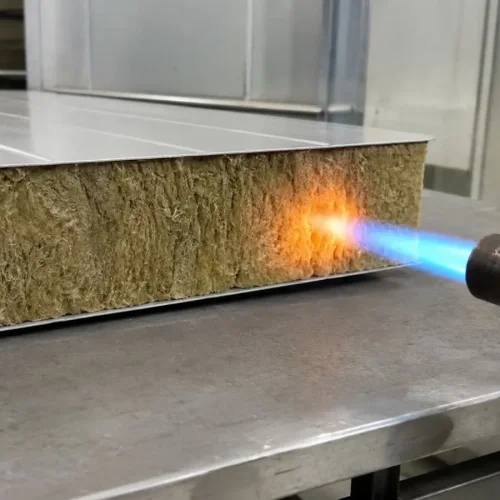
Rock wool sandwich panels are commonly selected for industrial buildings, warehouses, commercial envelopes, utility rooms, and project packages that place more weight on fire performance, stable thermal control, and practical wall or roof installation.
YG Panels supports project discussions for rock wool wall boards and rock wool roof panels, including reference widths, profile directions, custom panel length, and project-based core thickness matching. This product direction is often preferred when the project brief goes beyond basic insulation and requires a stronger envelope solution for fire-focused or acoustically sensitive environments.
✓ Commonly discussed for both wall systems and roof systems
✓ Used when projects prioritize fire-oriented envelope performance
✓ Custom length and project-based thickness discussions supported
Wall Board, Roof Panel, and Envelope Reference Support
If your project already has a required panel direction, target thickness, or fire-oriented specification, send that information first. It shortens product matching and helps quotation work move faster.
What Rock Wool Sandwich Panels Are Commonly Chosen For

When the project brief starts with fire performance, rock wool usually enters the shortlist first
Fire-Oriented Wall and Roof Direction
Rock wool core panels are commonly specified when the building envelope brief places strong emphasis on fire performance. Wall systems and roof systems in this category are frequently used for industrial and commercial buildings where that requirement matters early in the selection process.
Thermal Control with a Mineral Wool Core
The panel combines metal facings with a mineral wool core so the building envelope can perform as one prefabricated system. In practice, that means wall and roof discussions can move forward together instead of being split into several separate materials on site.
More Useful in Acoustically Sensitive Projects
Rock wool panel systems are also frequently considered where the building needs better sound behavior than a basic economy panel direction. Acoustic requirements still depend on the exact panel build-up, internal sheet detail, joint design, and tested system requirement.
Rock Wool Wall Board and Roof Panel

Rock Wool Wall Board References
Current wall references include embossed and flat rock wool board directions. They are shown as 1150 (950) width references with custom length discussion and 50 mm reference thickness for the illustrated build-up.
- Useful for wall systems where the project needs a cleaner continuous insulated envelope
- Outer surface direction and joint style should be matched to the facade requirement
- Panel length and final build-up are confirmed against transport, handling, and installation requirements

Rock Wool Roof Panel Reference and Roof Profile Direction
Including a 950 rock wool roof panel reference with 50 / 75 / 100 mm core discussions. Roof projects should also confirm profile direction, drainage logic, span, fixing method, and flashing scope before quotation is finalized.
- Roof quotations should distinguish between building roof use and wall cladding use from the beginning
- Profile, slope, drainage edge, and flashing details affect the right roof panel direction
- Roof panel length should be discussed together with transport and site installation conditions
How to Confirm the Right Rock Wool Panel Direction

Start with the Building Envelope Use
Confirm whether the panel is for an exterior wall system, partition wall, or roof system. The same product family name cannot replace this first decision because wall and roof build-ups follow different profile and installation logic.

Confirm Fire Requirement Before Comparing Price
Rock wool panels are often selected because the project brief is not based on price alone. If the design team, contractor, or buyer is working from a fire-oriented specification, that should be stated first so the product discussion does not move in the wrong direction.

Check Thickness, Length, and Span Together
Core thickness selection, panel length, and practical span discussion should be reviewed together. It is better to confirm these with the actual building use, installation direction, and project drawings than to rely on one fixed generic size.
Do Not Leave Flashings and Trim to the End
Roof and wall systems both depend on matched trims, corners, ridge or edge treatment, closure details, and compatible installation accessories. A panel quotation becomes much more useful when these items are considered from the beginning.
Applications for Rock Wool Sandwich Panels

Industrial and Commercial Buildings
Typical use discussions include production buildings, warehouses, workshops, storage facilities, and commercial envelopes where the wall or roof specification needs a more robust insulated panel direction.

Prefabricated and Utility Buildings
When the project package includes modular structures, utility spaces, or mixed-use site buildings, rock wool panels may be introduced where the envelope requirement goes beyond a basic economy panel choice.

Partition and Service Areas
Internal partitions, service rooms, and acoustically sensitive utility zones can also enter the rock wool discussion, especially when the project needs better sound behavior and fire-oriented performance within the same envelope package.
Customization and Quotation Details
Common Discussion Points
- Wall panel or roof panel direction
- Reference width, profile, and joint appearance
- Target core thickness and whether 50 / 75 / 100 mm roof reference sizes are under consideration
- Panel length, quantity, and destination country
- Required trim, corner, closure, flashing, and installation accessories
What Helps Us Quote Faster
- Panel schedule, drawing, or building elevation if available
- Use environment: industrial plant, warehouse, utility room, commercial facade, or roof system
- Whether the project is fire-oriented only or also considers sound-related performance
- Any required finish, color, coating, or metal facing discussion points
FAQ About EPS Sandwich Panels
What are rock wool sandwich panels?
They are insulated metal-faced panels built around a mineral wool core. They are commonly discussed for wall systems and roof systems where fire-oriented performance is an important part of the envelope requirement.
Can rock wool sandwich panels be used for both walls and roofs?
Yes. Wall boards and roof panels both exist in this product family, but the final direction should be confirmed from the beginning because the profile, joint logic, fixing method, and accessory package differ between wall use and roof use.
How are rock wool panels different from EPS or PU panels?
Rock wool is usually reviewed first when the project places more emphasis on fire performance and, in many cases, better sound behavior. EPS and PU may still be discussed for other project priorities, but they do not serve exactly the same specification logic.
Can panel thickness and length be customized?
Yes. Project-based discussion normally includes custom panel length and thickness matching. Your current references already show custom length discussion for rock wool board directions, plus roof reference core sizes such as 50 / 75 / 100 mm.
Can the exterior finish and metal facing be discussed during quotation?
Yes. The quotation process should confirm the required metal facing direction, finish requirement, color, coating, and whether the project needs a cleaner facade appearance or a more practical industrial finish.
What should be sent for an accurate quotation?
Send the intended use, wall or roof direction, target panel type, core thickness, length, quantity, destination country, and any available elevation, section drawing, or installation notes. That information reduces back-and-forth and improves quotation accuracy.
Talk to YG Panels About Your Rock Wool Sandwich Panel Project
✓ Quotation support for wall systems and roof systems
✓ Custom length and project-based thickness discussions
✓ Accessory, trim, and flashing package review
Help us match the right wall board or roof panel faster
Include the details below so the quotation can move from generic product name to the correct panel direction and build-up.
- Wall system or roof system
- Reference width, profile, or panel type if already known
- Target core thickness and required panel length
- Quantity and destination country
- Drawings, elevations, or installation notes
- Any fire-oriented or sound-related project requirement